Radon mitigation in Grand Island, NE
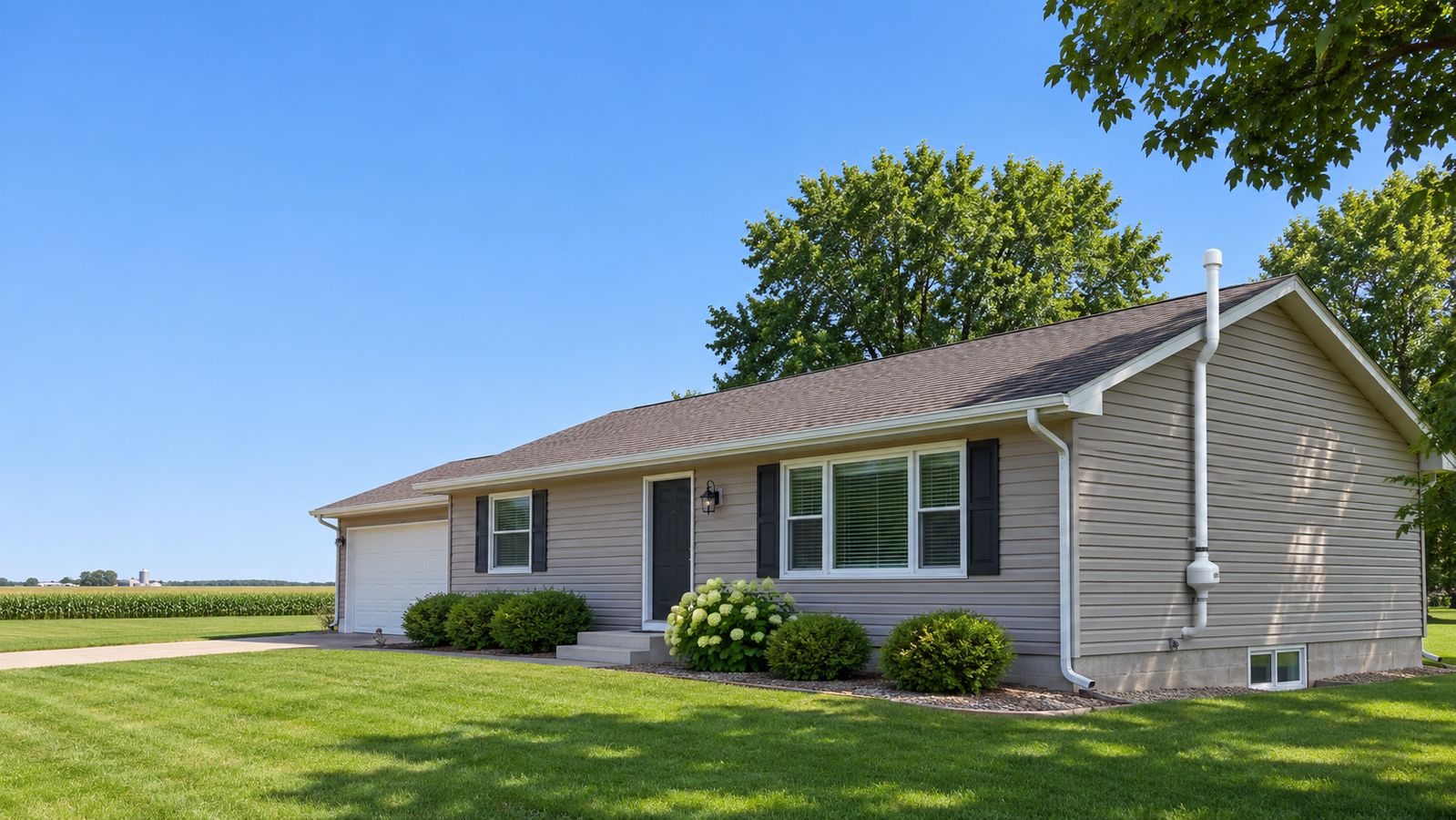
Radon mitigation means lowering the radon level inside a home that has tested high. In Grand Island that usually means a house with a basement or a slab, a white PVC pipe, and a quiet fan that runs all day pulling soil gas from under the floor and releasing it above the roof. It is a small, permanent piece of equipment, and in most homes it is installed in a single day.
If your Grand Island home has tested at or above 4.0 pCi/L, the U.S. EPA recommends fixing it. Many people also choose to act between 2 and 4 pCi/L, because there is no known safe level of radon. Use the form on this page to request a quote for a radon mitigation system in Grand Island.
Why radon matters in Grand Island and Hall County
Radon forms naturally as uranium in soil and rock breaks down. It seeps up through the ground and collects indoors, especially in basements, which most Grand Island homes have. The U.S. EPA lists radon as the leading cause of lung cancer among people who have never smoked and the second leading cause overall.
- Nebraska: the Nebraska DHHS Radon Program says more than half of radon tests in the state are above the action level of 4.0 pCi/L.
- Hall County: the EPA map of radon zones places the county in Zone 2, with a predicted average between 2 and 4 pCi/L. That is an average. Individual homes in Grand Island can test far higher or lower.
- Your home: two houses on the same street can have very different readings. Testing is the only way to know.
Read more on how common radon is in Grand Island homes.
Radon testing in Grand Island
A radon test is simple. A small device or kit sits in the lowest lived-in level of the house for a few days and measures the air. A professional test with a continuous monitor gives hour-by-hour readings and is the usual choice during a home sale. A do-it-yourself kit is a low-cost way to check a home you already live in.
In Nebraska, businesses that measure radon for others must be licensed by the state. We can refer you to a licensed provider for radon testing in Grand Island, or you can ask the Central District Health Department about test kits.
Radon help for Grand Island home sales
Radon often comes up during the inspection period when a house is sold. Buyers ask for a test, and a high result becomes something to negotiate. Sellers who test early avoid surprises. If you are buying or selling in Grand Island, Kearney or Hastings and the clock is running, say so in your request so the provider knows the deadline. See radon tests and fixes for home sales.
What radon mitigation costs in Grand Island
Price depends on the house: the foundation type, how the basement is finished, where the pipe can run and how much sealing is needed. National guides commonly put a typical system for a single-family home somewhere between about $800 and $2,500. The only number that counts is a written quote for your home from a licensed provider. Our radon mitigation cost guide for Grand Island explains what moves the price.
Finding a licensed radon contractor near you in Grand Island
Nebraska requires a state licence for businesses that test for radon or install mitigation systems for other people, and the Nebraska DHHS Radon Program publishes the list of licence holders. Only a small number of them work in central Nebraska, so searching for a radon company near you in Grand Island can turn up firms based hours away. Whoever you hire, it is reasonable to ask for three things before work starts:
- Their Nebraska radon licence, which you can check against the state list.
- Proof that they carry liability insurance.
- A written quote that says where the pipe and fan will go and whether the follow-up test is included.
What to have ready before you ask for a radon quote
A provider can give you a faster and more accurate answer if your request includes a few details. None of them are required, so send what you have.
- Your test result, in pCi/L, and whether it came from a home kit or a professional monitor.
- Your foundation: basement, slab, crawl space or a mix, and whether the basement is finished.
- A sump pit, if you have one.
- Any deadline, such as an inspection period or closing date.
- The best time to reach you by phone or text.
How a referral through Grand Island Radon works
- You send a request. Tell us the town, what you need, and your test result if you have one.
- We pass it on. Your request goes to one independent radon provider that holds a Nebraska licence and works in the Grand Island area.
- They contact you. The provider gives you their own quote and schedule. You decide whether to hire them. There is no fee to ask.
Grand Island Radon is a referral service, not a radon contractor. We do not perform testing or mitigation. Enquiries are passed to an independent local provider licensed by the State of Nebraska, who sets their own prices and terms.
Areas served around Grand Island
Requests are welcome from Grand Island and the surrounding communities in Hall, Buffalo, Adams, Hamilton, Howard and Merrick counties, including:
Grand Island is the seat of Hall County and sits just north of the Platte River and Interstate 80, where U.S. Highways 281, 30 and 34 meet. It is home to the Nebraska State Fair at Fonner Park and the Stuhr Museum of the Prairie Pioneer, and each spring the sandhill crane migration draws visitors to the Platte valley nearby. Find city services on the City of Grand Island website.
Radon questions from Grand Island homeowners
Is radon really a problem in Grand Island?
It can be. The Nebraska DHHS Radon Program reports that more than half of the radon tests in Nebraska come back above the EPA action level of 4.0 pCi/L. The EPA's radon map places Hall County in Zone 2, its moderate category. Levels vary from one house to the next, so the only way to know about your home is to test it.
Who does the work?
Not us. Grand Island Radon is a referral service. We pass your request to an independent radon business that holds a Nebraska licence, and they contact you directly with their own quote.
How long does it take to install a radon mitigation system?
Most single-family homes are done in one day. Homes with crawl spaces, several slabs or finished basements can take longer. Your provider will tell you after looking at the house.
Do I need a test before I ask for a quote?
It helps, because the result tells the installer how much reduction is needed. If you have not tested, ask for a test first. Local health departments in Nebraska often offer low-cost test kits.
Does it cost anything to ask?
No. Sending a request through this site is free. You only pay the provider if you decide to hire them.